Showing posts with label World War I. Show all posts

Thursday, 16 February 2017

Fighting Resistance Meeting with SMAG and WCML


Last week saw my research period come to a close and the presentation of my ideas to the team at Salford Museum and Art Gallery and the Working Class movement library. It was a great meeting with everyone interested in the process I had undertaken over the last 6 months. From researching Pilkingtons Tiles and learning about the infamous William Burton to visiting the amazing collection at SMAG and WCML.

I talked about my fascination with the idea for a Refuge and the possibilities of recreating one in the gallery setting and of my visit to Lindesfarne and Holy Island to document the refuges there. I really like the idea of offering refuge or sanctuary in these times we we live in.  Other ideas included the transmitting through radio waves the names of the 16,000 conscientious objectors and the creation of a set of Commemorative plates marking each global conflict since the end of the First World War of which there have been 226.

The idea that excites me most and ties in with my practice in the strongest way is the commemorative plates, it links in with the Pilkingtons Collection and Archive situated at the Gallery, it ties in with my current obsession of conflict and ceramics and then there will be a perfomative aspect of the presentation of the plates by having them used in the cafe at SMAG and Ordsall Hall as part of the regular service.

I am know in the process of creating 226 commemorative plates! watch this space


Thursday, 13 October 2016

Visiting the Collection at Salford Museum and Art Gallery with Peter Ogilvie- 6th October


Today I had a meeting at Salford Museum and art Gallery to see Peter Ogilvie the Collections Manager and the gatekeeper to the vaults. I’ll be honest with you I didn’t quite now what to expect when I arrived and was a little anxious about the visit. 

 It took the receptionist around 10 minutes to locate Peter and I thought at first that he had forgotten about the meeting it was only later on that I realised why it had taken so long to track him down. After a warm handshake I was taken down some stairs and the steel safe door was opened with a large bunch of keys .
Peter tells me that the museum opened in 1850 and was the first unconditionally free public library,  and didn’t have a collection as such and the collection has just grown over time.

 The first Room as you may expect was racked out with floor to ceiling paintings, from 20th Century British Moderns to Victorian Portraits in Gilt frames, to a collection of  local Miners paintings given therapeutic art once the pits had closed. Many of the paintings appear in the "Your Paintings “ website (now Artuk)which lists all the paintings in the UK in public collections. Peter tells me that it took them the best part of a year to photograph all of Salfords paintings.
 The next room contained at least as many water colours and works on paper, many from Northern Artists and whole rack of local history paintings containing local scenes and areas of local importance. I didn’t realise but Salford Museum has a remit to take in such works , or objects that have local importance or significance and I suppose this is why it was important for them to secure the Pilkingtons tile Archive.

After this second room I was impressed by the sheer number of paintings, it was only on entering the next section of the collection that I began to feel overwhelmed. A room full of social history objects, industrial objects and machinery, a pair of what looked like ancient“inuit” ski’s, a dolly tub, even a soda stream. This section was populated with objects that have been donated to the museum by the public, objects that are significant to a time in history, this theme carried on to the next huge room floor to ceiling racking contain intriguing archive boxes of costumes, dress uniforms, tri-corn hats, doctors bags, childrens toys.
  This room then spilled out to house another museums collection that closed down in Salford some time ago, lots of childrens toys and games, from the Victorian era right up to the eighties. This room then led on to a furniture room, and then an occupation room where objects are field by the profession, doctor, chemist, carpenter etc. By this point I was completely overwhelmed by the sheer volume of things, and the final room was cupboards wall to wall with ceramics, glass and pewter ware.

The collection has over 120,000 items at the last count and this is spread throughout the basement of the whole of the Museum and Art gallery. It was on leaving the collection that realised why it had taken 10 minutes to track Peter down in the labyrinth of History underneath the museum. 

What struck me was the sheer weight of objects and the need to store them as part of our shared history, many of these items will never see the light of day again, catalogued and boxed until somebody takes an interest and asks for a viewing. I wondered if this is just another aspect to our society for hoarding, consumerism and placing value on material objects, but then each object has a story and its truths are just waiting to be unlocked or re-told. I will be visiting again soon to pull out some WW1 era objects that might spark some ideas or take my project down a different path.


Abraham Lomax, 16,000 experiments - Salford Local History Library 29th September 2016


This morning I took some time to visit Salford Local History Library and have a quick peek at the archival records for the Pilkington Tiles Archive which Duncan McCormick the librarian had kindly dug out for me.

The folder contained some 122 pages each one documenting an object, letter, artwork that forms part of the History of the company. The file was put together by Barry and Angela of the Lancastrian Pottery Society. What struck me most amongst the many correspondence and documents was how similar daily life seemed to be to ours. There were rent and rates demands, insurance documents, share capital and tax returns. Letters from prospective employees, legal demands for slander, magazine cuttings, artwork ideas, and a thousand patent requests. Just reading through the list of documents and objects gave me a real feel for the company and what it achieved. The company was a bit of an anomaly really, creating its own identity outside of Stafford and Stoke the pottery capital of the world. I think this gave it a real unique identity, it was also different for the workers who were used to the satanic mills and coal mines. The pottery was a place of imagination, colour, art and spectacle.

 I highlighted some things that I think will be of interest to the project one of them being the notebooks of Abraham Lomax who was the ceramic chemist left to experiment with glazes and clay bodies. He did some 16,000 experiments over his initial first years with much of his work providing the factory with important discoveries and glaze recipes for years to come.  The other is a book by Franklin Shaw entitled “my Fifty years” which I believe will touch on the the War years.

The Archive and the way it is documented is interesting in itself as life becomes History to be stored and sorted through at a later date. The pressing arguments of the day become a memory or artifact with little relevance apart from the lives it has touched at the and for someone looking for clues for the future.

Tour of Working Class Movement Library - Tuesday 16th August


-->


For those of you who haven’t been to the Working Class Movement library on Chapel Street I urge you to go for two reasons. Firstly for the brilliant story about how it was formed and how it ended up located across from the University. Secondly to learn something about the history of the working people, your history this is the history of my parents and grandparents and there parents. It also houses some of the best collections of social literature that I have seen. 


I had a great tour of the collection by Lynette Cawthra the manager of the library, I was privileged to spend time in the Thomas Paine room where there is the largest collection of his writings in the UK  a gift from a prominent collector. I have been trying to track down the original pamphlet “Common Sense” for some time now and there it was (this is the pamphlet that was banned as it was so incendiary and sparked the American revolution to throw out the Brits)  I saw rooms and rooms of peace pamphlets, books on socialism, warfare, nuclear disarmament, I could quite easily have sat in any of the rooms and have my reading material for the next 50 years ! 


There is also a great ceramic collection in one of the back rooms, containing many commemorative plates, tankards and jugs, sparking ideas for possible pieces for my WW1 Fighting resistance project. What struck me was the creation of a collection that was formed by two individuals with a passion for books on working class history, and the foresight to protect this. How much of our history is white washed or green washed, hidden from us or re-written to support the ruling classes. This library is a beacon for the common man and a start point for what I believe to be a great adventure.


For more information on the Working Class Movement Library please click here:
http://www.wcml.org.uk/

Arthur Gardiner (CO) my new personal hero - 22nd September 2016

Image result for Arthur Gardiner

-->
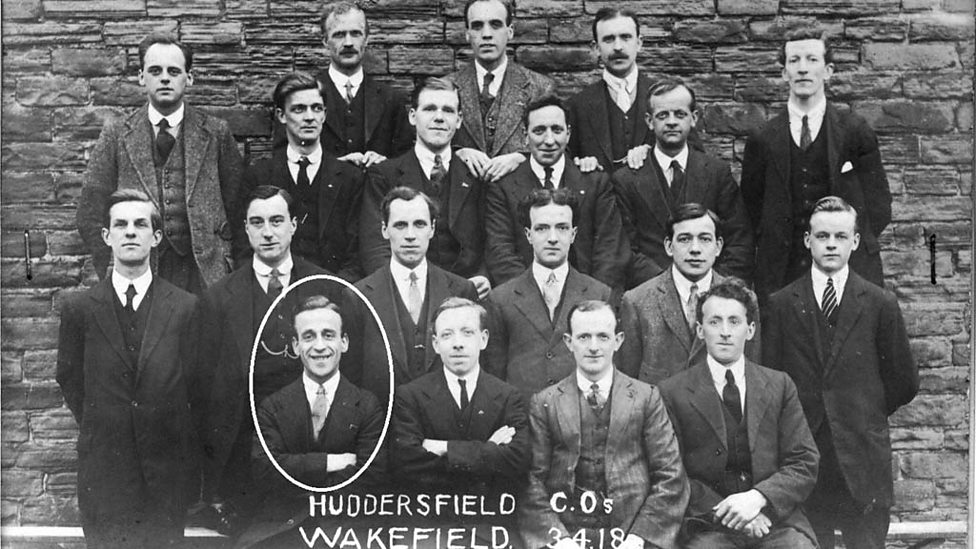
This morning I managed to grab breakfast at Salford Museum and Art Gallery and find time to finish the book I have been reading on Conscientious Objectors (CO’s) in Huddersfield by Cyril Pearce. It is a truly illuminating book focusing on one communities support and the reasons behind the large proportion of CO’s in that area.

What it made me realise is that at the turn of the century the “workers” were extremely well connected and supported through different organisations, political and religious parties, social clubs, unions and trade guilds, something that I feel that we have lost over the last forty years. The overriding feeling was of the bravery in face of the weight of a nation, peers and propaganda to stand up and say that you would not fight! My new Hero is Arthur Gardiner who point blank refused conscription on the grounds that he did not want to murder a fellow worker in Germany:

“ I am 26 years of age and I work as a wool and cotton dyer. I cannot conscientiously undertake combatant or non combatant military service. For a number of years I have devoted my time and energy, both publicly and privately to the economic and moral uplift of humanity. I am opposed to all forms of militarism. I believe it to be a detriment to the welfare of all nations “

Arthur Gardiner at his tribunal.

The problem being that conscription was brought in with The Military Service Act of 1916 to compel single men between the ages of 18 and 40 to some form of military service. This became law on the 27th January my birthday! next year I turn 40 and will be celebrating the fact that I will no longer be deemed fit for military service due to my age!...maybe I have to wait till 41? 


more informaton Cyril Pearce and the Pearce register of Conscientious Objectors here :

http://www.1914.org/news/cos/


more information on Arthur Gardiner here : http://www.bbc.co.uk/programmes/p01s6fbd

Thursday, 4 August 2016

Fighting Resistance WW1 - Artist Residency at Salford Museum and Art Gallery & Working Class Movement Library


I am pleased to announce that I have received Arts Council funding for a new project working with Salford Museum and Art Gallery and the Working Class Movement Library. I will be Artist in Residence as part of an open Network Residency with access to both institutions with the aim of creating a new body of work for public exhibition.

 The project is based on a contemporary artistic response to the World War I centenary looking at Conscientious Objectors, War profiteering, War resistance and Shame Propaganda. I will have access to the Pilkington Tile and Pottery archive which is now part of the Salford Museum and Art Gallery collection.

 As part of this year long project I will be working with Mark Devereux Projects,  and also partnering with Castlfield Galleries New Art Spaces Churchgate House in Bolton where I have a great studio space to work from.

 The exciting thing about the project is that it is research driven and there are no pre-conceptions about the artwork that will be created. This gives me freedom to follow my muse and artistic process, to create a contemporary response to World War I.

Research has started to day with the arrival of two great books, The Pot Book by Edmund De Waal - an A-z guide of over 300 makers, schools and styles throughout history and Comrades in Conscience by Cyril Pearce - The story of an English community's opposition to the Great War.


This blog will be used to document the project as it develops